
Kentucky Busted Mugshots
Every Kentucky booking photo traces back to one office. The jail or regional facility creates the booking record when a person is processed. The arresting police agency keeps its own incident report. Courts keep the case file. If the person enters state custody or supervision, the Department of Corrections may hold a separate offender profile and photo. These records look alike but come from different offices and answer different questions.
Start with the source closest to the event. A jail roster shows who is in custody now. For questions about a report or a held booking photo, call the arresting agency. Court records show case events and the final disposition. A DOC profile covers state corrections status. No single system lists every arrest in Kentucky, and a hit in one says nothing about another.
A word on booking photos: a mugshot captures one moment in a legal process, not an outcome. Charges can shift or vanish entirely. Courts hold the final word on status.
Kentucky Mugshot Law and Limits
Kentucky's Open Records Act counts photographs as public records. Access is never automatic, though. KRS 61.870 defines the public-record category. KRS 61.872 gives Kentucky residents a way to inspect records or request copies from public agencies. KRS 61.878 sets exceptions for protected information and some investigative files. A custodian may redact a protected portion. The office can also deny access under an exception or point you to the agency that holds the item.
KRS 61.8746 targets a narrower practice: charging money or other consideration to remove a booking photo or covered inmate photo from a publication or website. The statute lets a person sue in Circuit Court. Courts can award relief. It does not outlaw every arrest image or erase news coverage. A private copy posted elsewhere may survive. The Kentucky mugshot law and access page covers the statute's history and practical correction paths.
Juvenile records sit behind a separate wall. Kentucky law keeps most records on children under eighteen away from the public. A narrow exception covers specified serious delinquency matters involving an older child. That exception never licenses publishing a juvenile booking photo. If age or case status is unclear, do not repeat the result.
Qualifying acquittals and dismissals can be expunged automatically after the statutory objection period. Other matters need a petition and eligibility review. An entered order reaches court and law-enforcement files, including any photo held there. Publisher copies and cached versions can linger.
Kentucky Booking Record Fields
Kentucky has no single statewide booking-card layout. Fields vary by jail, custodian, agency, record type, and local photo policy. The county jailer retention schedule allows an inmate record file to include a photograph, incident reports, court proceedings, and property records. A public roster may reveal less. The booking photo may be withheld or absent entirely.
| Record field or item | What it can show |
|---|---|
| Name and booking date | Some live county or regional rosters show these basic entry details. Fields and date ranges differ by portal. |
| Booking photograph | An identification image made at intake, when taken and released under the custodian’s policy. |
| Incident report | A separate record that may be kept in the inmate file or by the agency that made the arrest. |
| Court papers | Case material held by the court clerk. A roster charge is not a final court disposition. |
| Property record | An intake or custody record that may be part of the inmate file, not a public roster field. |
| DOC profile and photo | KOOL can show a name, DOC or PID identifier, location, offense-count fields, a status label, and a photo path where available. |
A field's label only tells you so much. "Booked" means processed into custody. "Charged" means an offense was filed, "disposition" is the court's outcome, and "expungement" is the legal process that removes or deletes covered official records.
- Booking
- Intake and processing after an arrest or transfer into a detention facility.
- Disposition
- The court’s recorded outcome for a charge or case.
- Expungement
- A court and agency process that removes or deletes covered records under Kentucky law.
Busted Photo Requests in Kentucky
Public searches are not the only route. Any Kentucky resident can request an existing record under the Open Records Act. Send the request to the office that holds the item. A sheriff or police department may keep the arrest report. The booking facility holds its intake photo. Regional detention can place a record in a different county, so the Kentucky County Directory helps you reach the right local source.
- Write down the person’s name, approximate arrest or booking date, likely county, and the agency or facility involved. Add a case, incident, or booking number if known.
- Send a written request to the official records custodian. Kentucky law does not require one special form, but the description must let the office identify the record. Ask for the particular report or booking photo, not a new history compiled from several systems.
- If the arresting agency and jail differ, ask each custodian for the record it made or keeps. If an office does not hold the item, the law directs it to identify the proper custodian.
- For a state-police record, use the Kentucky State Police open-records route. For a DOC record, submit a written request with the person’s full name and date of birth or offender ID.
- Check the response for any stated copying charge, exemption, or delay reason. The five-business-day rule governs a response, not guaranteed delivery of a photo by that date.
The DOC takes offender-record requests by email at correctionsopenrecords@ky.gov. Mail also works. Write to the Division of Public Affairs, Open Records Coordinator, PO Box 2400, Frankfort, Kentucky 40602. The agency lists its copy charges. The applicable response rule excludes weekends and holidays. Local fees and submission methods depend on the county office or regional facility. Kentucky sets no statewide booking-photo fee. The KSP request page explains its own records channel and the public-records contact path.
A records request asks a custodian for an existing item. It never asks the office to judge the case or guess the court's result.
Find Kentucky Busted Mugshots
Start with the question you need answered. A custody search answers who is held right now. A booking or incident record names the arresting agency. Court questions need the case file itself. Rosters drop people after release, while the agency keeps the booking record on file.
- Use the place of arrest to choose the county site. Check whether the person may be held at a regional jail that serves more than one county.
- Open the official jail or regional-facility roster and read its date window, status filters, and photo note before searching. Do not treat a blank page as proof that no booking occurred.
- If the person is no longer listed, ask the arresting agency about its incident record and ask the facility that processed intake about its booking record or photo.
- Use CourtNet to locate public case information, then contact the county Circuit Court Clerk for the underlying file or an older record.
- If the person is in state custody or supervision, search KOOL. For federal or immigration custody, use the separate BOP or ICE locator; neither is a county mugshot roster.
Online searches do not reach everything. Offline records need a public-records request. Give the custodian one record type and a narrow date range, since that works far better than asking a single portal for every stage of a case.
Where Kentucky Busted Mugshots Appear
Kentucky's 120 counties run a patchwork of custody systems. Vendors include Public Safety Cloud and JailTracker, Cadmus Scribe, BlueHorse, iSOMS, and older pages. No vendor sets one statewide photo rule. Some counties send custody to a regional facility instead. Many current-only pages drop people after release. Others add a filter for those released in the last few days, and refresh schedules rarely get stated. The Adair County Regional Jail roster shows one current-custody route, not a countywide history.
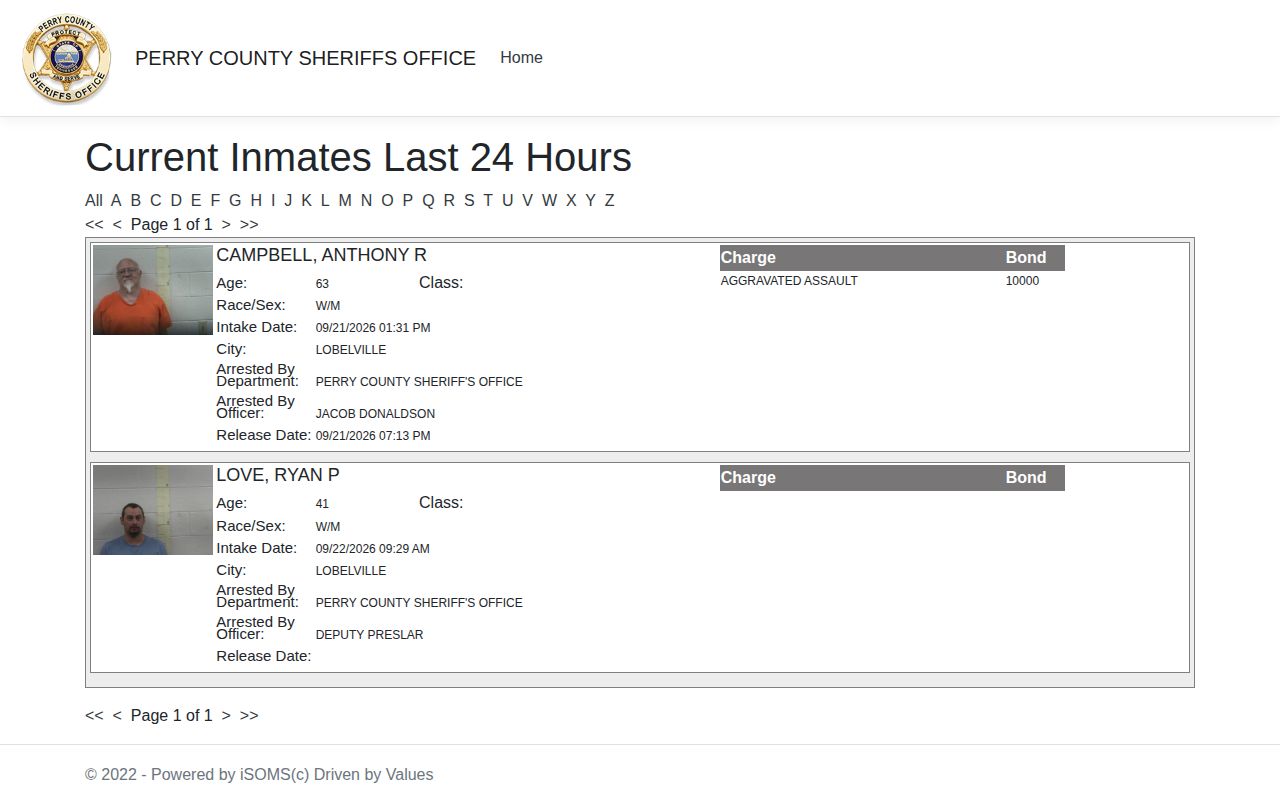
Perry County is a documented exception. The sheriff's portal offers windows of 24, 48, 72, and 168 hours. That helps when someone left custody quickly. Blank results can still reflect a transfer, a search setting, a delay, or a portal glitch. The portal's 24-hour view covers one short window.
Need a longer look? The same official portal's 72-hour setting widens the view, though it stays a local tool rather than a statewide arrest feed.
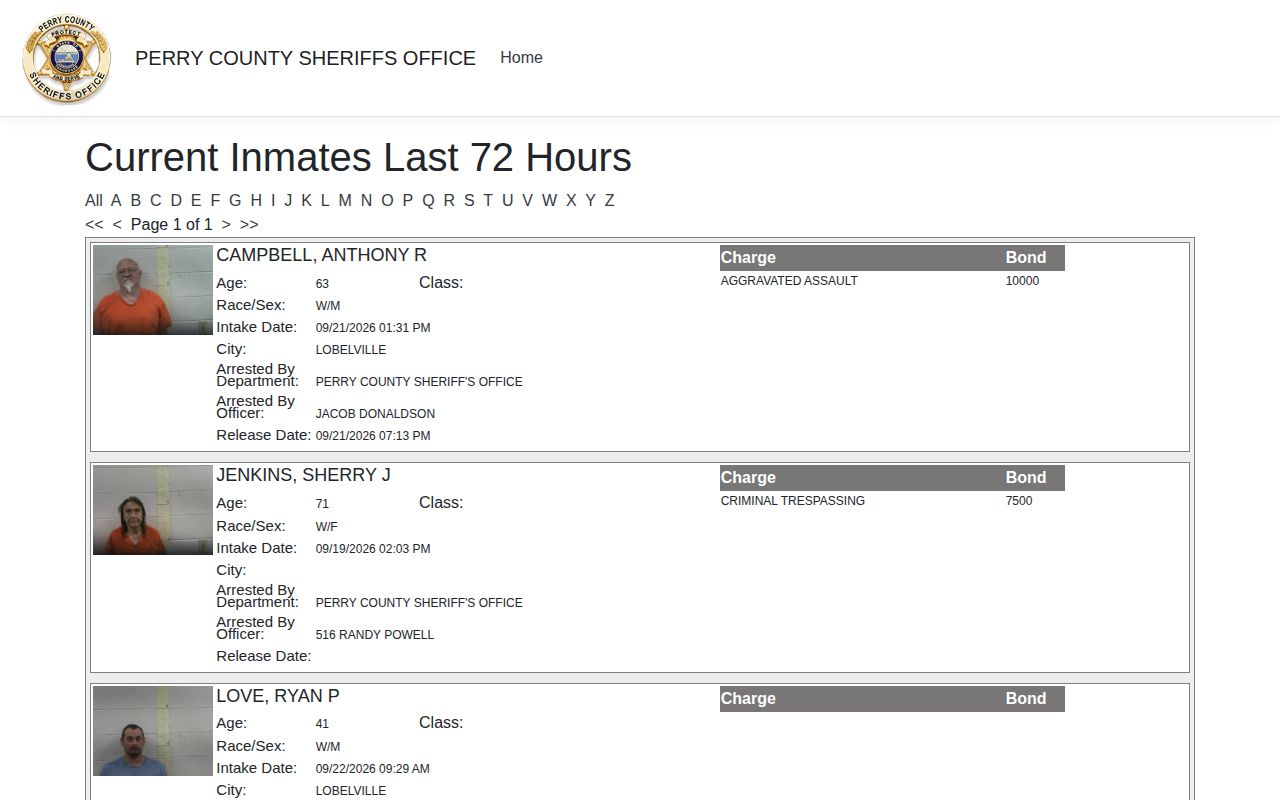
Photo access shifts county by county. Scott County removed inmate photos from its public website. Names, charges, and specific-photo requests remain. A January 2026 report describes a similar change at Franklin County Regional Jail. The WKYT report draws that distinction, and a roster stays useful even after its photo policy changes.
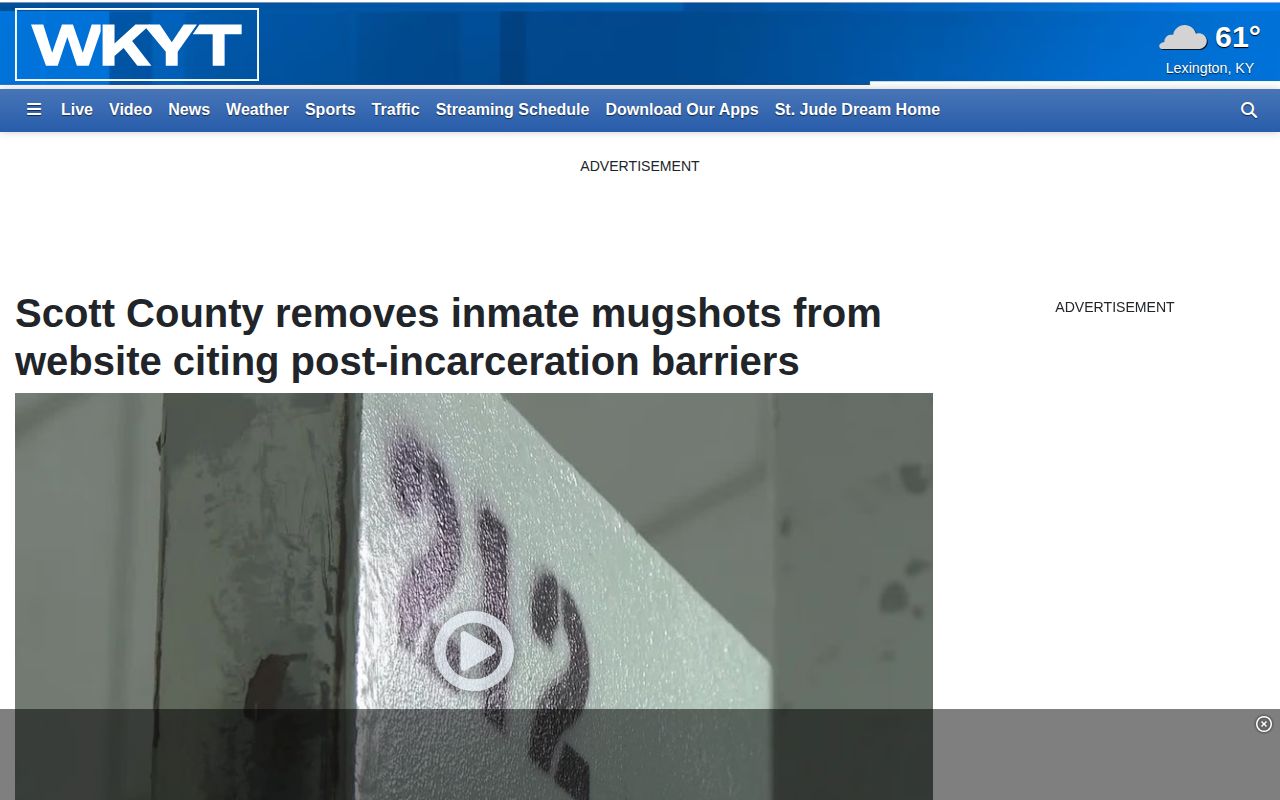
Regional detention complicates county labels. Bracken routes people to Mason. Estill and Owsley go to Three Forks. Union sends people to Webster since its local jail closed. Pendleton and Robertson use Bourbon. The arresting county, the holding facility, and a vendor's label can all differ, so the directory points to county coverage while the facility roster may live elsewhere.
Some counties list no county-local roster or online search: Allen, Anderson, Ballard, Breathitt, Butler, Carlisle, Clinton, Elliott, Floyd, Green, Greenup, LaRue, Lincoln, McCracken, McLean, Morgan, Washington, Whitley, and Wolfe. That gap concerns online access, not missing jail records. Ask the likely agency or facility custodian directly in those places.
Urban counties bring more agencies and news coverage. Rural areas lean on regional custody routes or skip public portals entirely. Neither pattern changes the law, and neither reveals whether a particular record exists.
Sheriff apps appear in some counties. No statewide app carries a complete mugshot feed. VINE is a custody-notification service, not a photo archive. Social posts can explain an agency announcement, but they cannot replace a roster, a records request, or a court result.
Kentucky DOC Photos and Search Fields
KOOL, the Kentucky Online Offender Lookup, is the state's official DOC search. It covers state custody and supervision, not fresh arrests. The service warns its data may contain errors. Entries newer than 120 days may not be final. Updates run four times a day, yet a new photo can lag several days behind intake.
Search fields run deep. A query can use a name or alias, DOC or PID number, offender type, supervision status, location, county of supervision, offense, KRS code, indictment, conviction county, age range, sex, crime date, conviction date, institution start, supervision start, escape or abscond date, and projected release date. A camera icon signals a photo path. That path is not a county booking. Most profiles carry photos, but the DOC promises none.
Institutions refresh photos at least once a year or after a major change in appearance. The image serves identification. It is not always the arrest photograph. Records for someone incarcerated years ago may require a written request to Offender Information Services rather than a current public profile.
Read the fine print first. The KOOL landing page states its limits on accuracy and public use before a search begins.
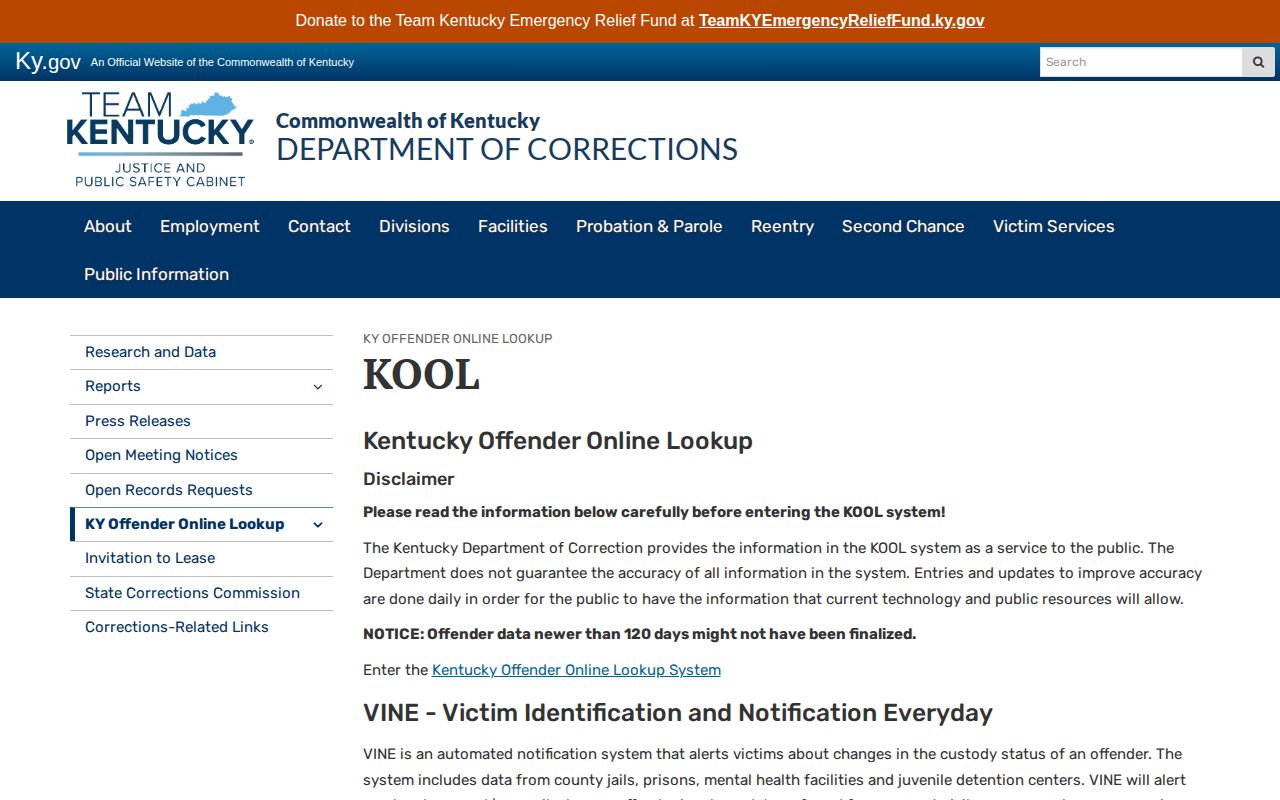
Check the profile's current location and custody label too. A state-prison profile does not place anyone in a county jail today.
Kentucky Wanted Lists and Warrants
Kentucky spreads wanted information across several offices, and each one has its own purpose. The Kentucky State Police Cases of Interest page covers selected cases by county. It is not a full warrant list. KOOL adds another angle. It flags DOC profiles marked as absconded. The U.S. Marshals Service runs Eastern and Western Kentucky district routes and posts selected federal fugitive profiles. These notices serve different aims. One unofficial merged face list would blur them. To verify a warrant, find the issuing court or agency and confirm with that office directly. CourtNet can locate a case. It does not guarantee warrant status. A sheriff's notice can go stale, and listings change after return, arrest, correction, or court action. Never approach, follow, or detain anyone named in a notice; send tips through the agency's official path and call 911 in an emergency. The KSP county selector routes selected public-safety cases to the proper official source.

The KSP tip page accepts incident details plus optional contact information. Send tips to law enforcement. A private publisher is the wrong home for them.
Busted, Released, or Sentenced
Custody status drives which system helps you. A jail roster is only a current view. Someone can vanish from it after release or transfer while the booking record stays with the agency. A DOC profile is a separate corrections record, and a court file can stay open long after a person leaves custody.
| Status | Where to look | What the record means |
|---|---|---|
| Just booked or held locally | County or regional jail roster | Current custody, with photo visibility set by local policy. |
| Released from a local jail | Booking or incident-record request to the holding or arresting agency | Release does not end the court case or erase an agency’s record. |
| State prisoner or supervised person | DOC’s KOOL profile and records unit | State-custody or supervision status, not a county intake photo. |
| Federal or immigration custody | BOP or ICE locator, with county records checked separately | A distinct custody system; neither locator supplies public mugshots. |
CourtNet surfaces public case information. Yet the Administrative Office of the Courts never holds the underlying county file. For papers and outcomes, the county clerk is the route. A roster charge can differ from the final indictment or disposition too. The CourtNet search interface shows the statewide, jurisdiction-based case path.
An empty county roster settles nothing. A federal locator result, or its absence, cannot tell you whether another agency holds the person or a related record.
Kentucky Busted Roster and Record Channels
Let official records lead the search. The table splits each source by purpose, and a name missing from one channel does not settle what another custodian keeps.
| Channel | What it covers | Photo or status limit |
|---|---|---|
| County or regional jail roster | Current people held at the listed facility; some portals also show a short recent-release window. | Photo policy and search fields vary. A release or transfer may remove a name from the live list. |
| Arresting sheriff or police agency | Incident and booking records made by the agency. | It may not be the agency that holds the person or the intake photo. |
| CourtNet and the county clerk | Public case information and the underlying court file. | CourtNet is not a roster; older records may have moved or been destroyed under a retention schedule. |
| DOC / KOOL | State custody, supervision, and some DOC absconder status. | Photos are profile images, not guaranteed booking photos. |
| KSP and U.S. Marshals Service | Selected cases of interest and selected federal fugitive notices. | These are not complete Kentucky warrant lists. |
| BOP and ICE locators | Separate federal-prison and immigration-detention status routes. | Neither service publishes a public mugshot gallery. |
| News and secondary publishers | Selected reports or copied entries that may help locate a date or agency. | They are unofficial and can be incomplete, stale, or labeled differently from the custodian’s record. |
Government records come first. Behind them sit private reproductions: Busted Newspaper's Kentucky index, RecentlyBooked Kentucky, Mugshots.com's Kentucky route, Arrests.org Kentucky, and Mugshots.zone. None is an official custody record. A date listed there does not mean the person is still in custody. Check entries against agency and court sources first. The RecentlyBooked Kentucky browse page shows a county-organized secondary index, not a live government roster.
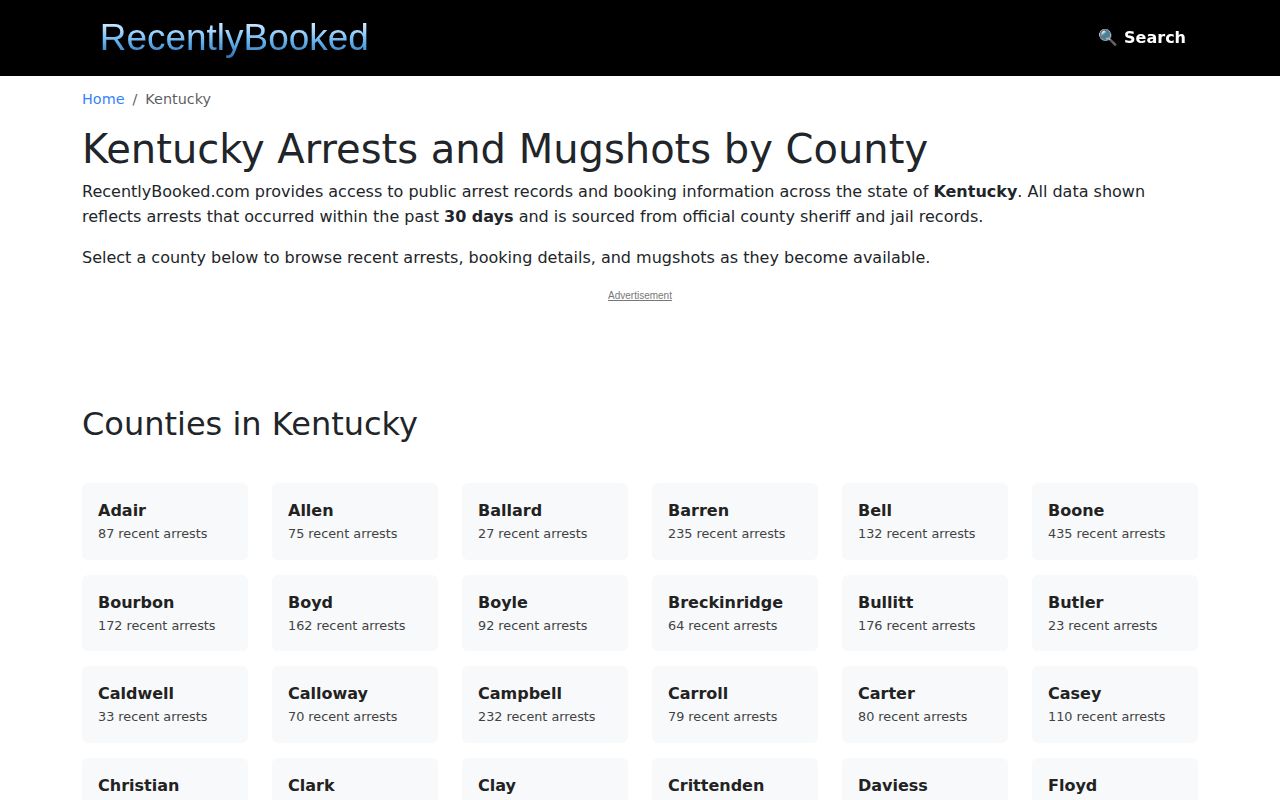
Each county page covers its own beat. The county directory routes to local rosters, records offices, and regional custody paths.
Old Kentucky Booking Records
Old records live by agency retention schedules. There is no single statewide online archive. The Kentucky State Police schedule lists a Mug Shot File series. Its retention runs 20 years. Access limits apply. The county jailer schedule generally keeps an inmate record file five years after release, and that file may hold a photograph plus custody papers. Local schedules and approved changes differ.
Some state institutions have permanent historical registers in the corrections schedules. Each covers a named time period. Entries can record a name, number, date received, offense, sentence, county, and discharge. Digitized photo books are not promised. The archive section covers KDLA's request process and the limits of historical searches in more depth. Retention only means the agency's records plan allows or requires keeping a file; it does not promise a photo is online, still exists, or can be released. Ask the custodian for a specific series, agency, date range, or case reference.