
Where Old Kentucky Mugshots Live
No single Kentucky archive holds every past booking photo. The Kentucky Department for Libraries and Archives preserves state records and historical collections. DOC prison registers can run long. Kentucky State Police keeps its own mug-shot file under an agency schedule, and county jailers hold local inmate records for fixed periods. Court files travel a different route through the county Circuit Court Clerk, the State Records Center, or KDLA once material grows old enough to transfer. Old material moves on.
Each collection answers a different question. A prison register documents who entered an institution, a sentence, or a discharge. A court docket tracks case events and legal status. A jail file may hold a booking photo. None of that proves a photo survives, is indexed by name, or can be released. So the first job is naming the likely custodian and the record series. Not every arrest left a card. And an old card is not always still online.
Kentucky Archive Inventory
The KDLA schedules say what agencies keep and when destruction is allowed. Digitization is never promised. That is why this inventory separates each archive lead from its actual access route.
| Collection | Where and era | How to access |
|---|---|---|
| Crime Register | KDLA records for prisoners at the Kentucky State Penitentiary or Reformatory in Frankfort; crimes dated 1891–1926. | Request by the record series, institution, and date range. The schedule does not say every volume contains mugshots. |
| Register of Prisoners | Historical penitentiary, branch penitentiary, and reformatory periods; fields can include name, number, received date, race, sex, age, crime, sentence, county, and discharge. | Ask KDLA for the relevant register and institution. Some entries include physical-description information. |
| KSP Mug Shot File, series 00042 | Photos showing an offender’s appearance at or around arrest; the schedule states 20 years at KSP. | Ask KSP about its retained record. Access restrictions and destruction or replacement rules may apply. |
| County Jailer Inmate Record File | A local file may include photos, incident reports, court proceedings, and property records; the general schedule says destruction five years after release. | Contact the jailer or agency that held the person. Check local schedule variations and approved changes. |
| County court case file | Held by the Circuit Court Clerk; older records may be at the State Records Center or KDLA, or may have been destroyed. | Use CourtNet to identify a case, then ask the clerk where the underlying file is held. |
The field list for old prisoner registers is no guarantee. Not every period carries every field. Some registers include physical descriptions, the schedule says. Descriptions are not photographs. Ask for the record by its schedule name, then let the custodian say whether that series holds the item you want.
Kentucky Photo Retention Schedules
Retention works like a clock for agency records. It never promises public online access. KSP's schedule describes series 00042. That series is a photographic file of an offender's appearance at or around arrest. Prints may come from DOC, the KSP laboratory, or other law-enforcement and criminal-justice agencies. The file carries a 20-year agency retention period. Access restrictions sit under KRS 17.125 and KRS 17.150. An outdated image may be destroyed or replaced with a newer one. A deceased-offender destruction provision is listed as well. Nothing in the schedule promises every image stays searchable for the full period.
The county jailer schedule works differently. An inmate record file may contain a photograph, incident reports, court proceedings, and property records. The general retention period runs five years after release. A general jail booking entry has a shorter stated period. Local schedules and approved variations matter. No statewide rule can tell you whether a specific county file was kept. Someone released decades ago may have no surviving jail copy. The court file or another agency record might remain all the same.
KDLA's corrections schedule lists permanent historical prisoner-register series. The Crime Register covers 1891–1926, and prisoner registers carry longer historical periods. Permanent means the register is kept as an archival record. That does not turn each entry into a digital image. It does not prove a separate booking photo was attached, nor guarantee open inspection. A schedule can show the record path. Availability still depends on the collection and its access rules.
CourtNet and Kentucky Case Files
Kentucky's CourtNet covers all 120 counties. It is a statewide starting point for case information. Search requires a jurisdiction. It may also ask for a case number or combinations of a name, date of birth, driver-license data, or other fields. The CourtNet help page spells out the search requirements. Use only enough identifying detail to find the likely case. CourtNet can surface a case, party, citation, or status. Still, it is not a booking roster, and it does not hand over every court document. The Kentucky CourtNet statewide entry page shows the official route and its jurisdiction requirement.
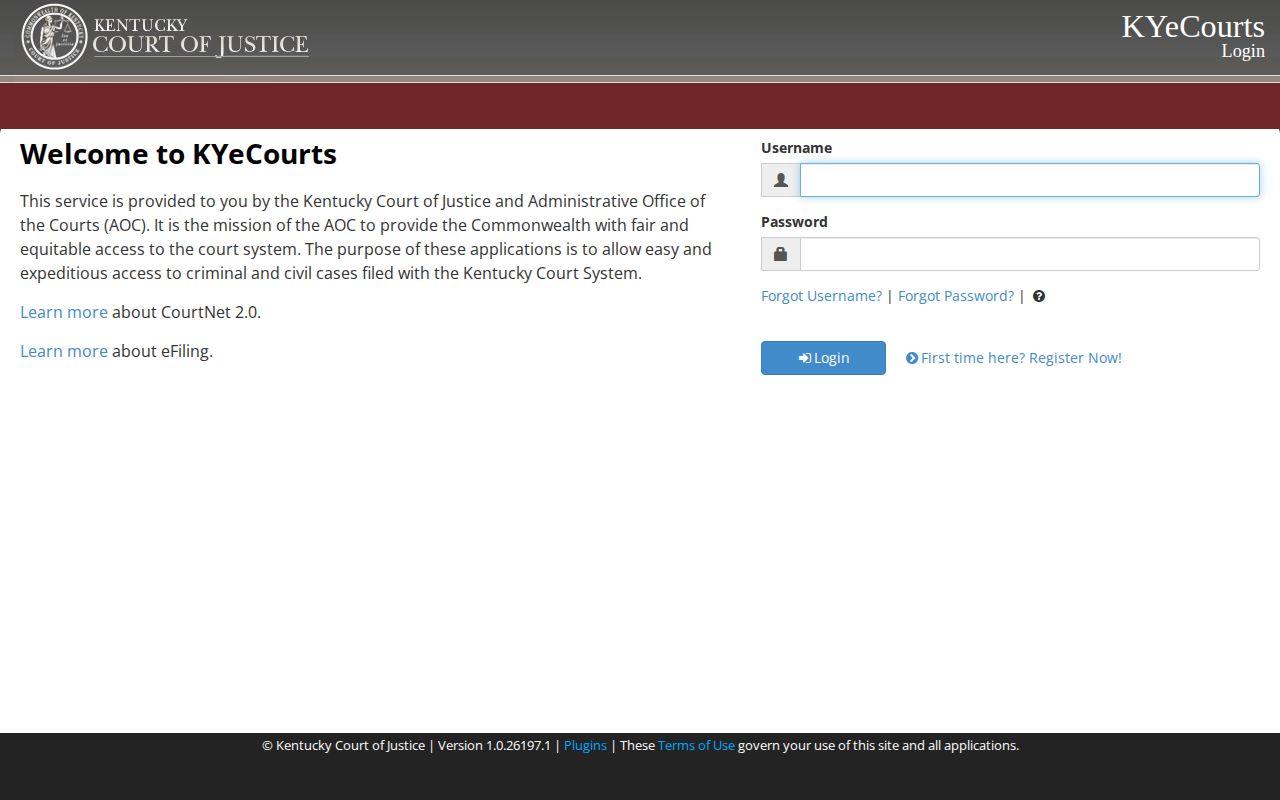
CourtNet is a starting point. It does not replace the clerk's underlying case file or an agency's booking photo. The Administrative Office of the Courts keeps no county case records. That work belongs to the county Circuit Court Clerk. Ask there first. Older files sometimes move to the State Records Center or KDLA, and some are destroyed under an approved schedule. If CourtNet gives you a case number, include it. The clerk can then locate the file quickly. A case date is not a booking date. A charge listed early in a case may shift as the matter moves forward, so rely on the court's later disposition when one exists. The Court of Justice request page names the clerk as the starting point and explains where older records may be held.
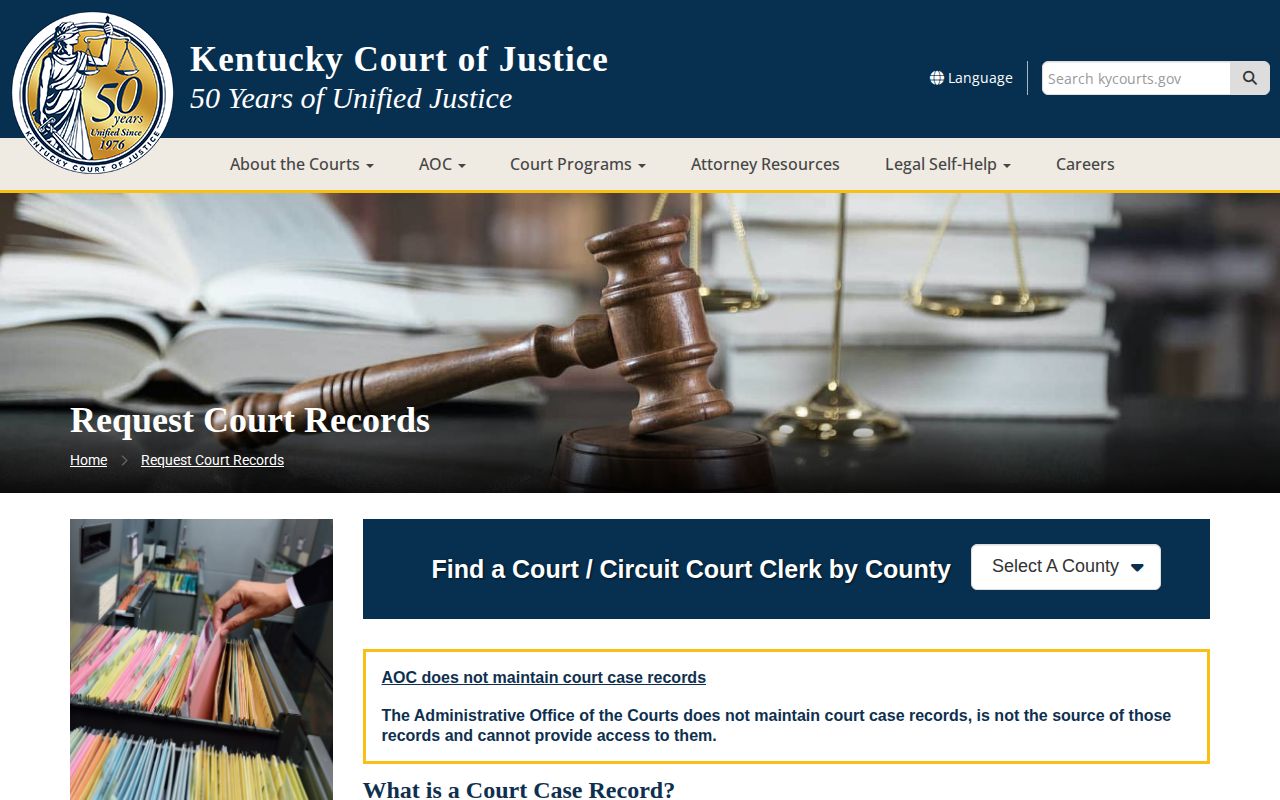
The portal points to a case. The county clerk or the named archives still holds the file itself, whenever it survives.
Requesting Kentucky Archive Records
KDLA accepts archive requests online. Its form explains delivery and payment. The guidance estimates four to six weeks for a reply. Extra reproduction charges may apply beyond the included allowance. Mail is another option. Address payment to the Kentucky State Treasurer, Archives Research Room. The PO Box is 537, 300 Coffee Tree Road, Frankfort, KY 40602. The Archives FAQ adds cautions. Not every collection has a personal-name index, some DOC records stay restricted, and criminal files carry gaps and date limits. KDLA's official records-request page presents the online form along with delivery details.
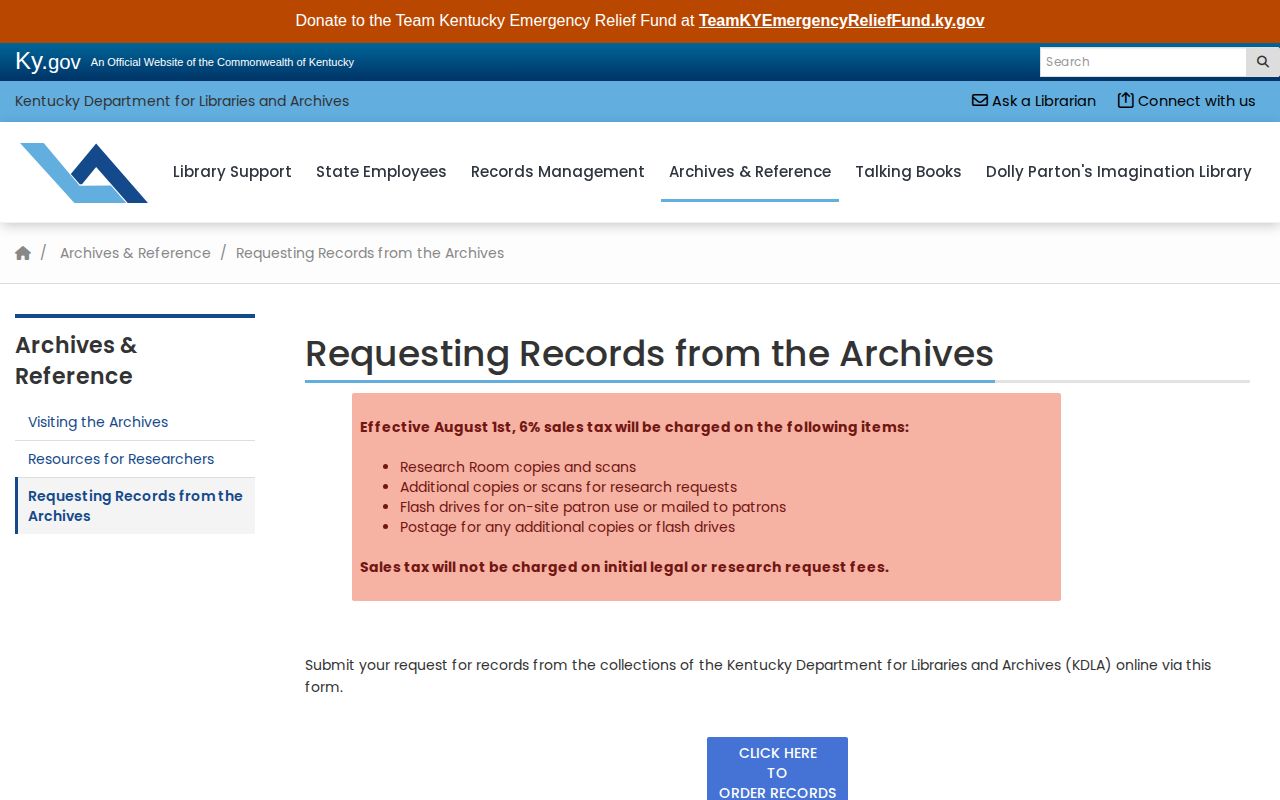
Name the series or institution in your request. An archivist can search far better with that than with a broad plea for every old mugshot.
- Write down the person's name as it may appear, the county, institution, and approximate year or date range.
- Use CourtNet or a known case number to identify the court case, then ask the Circuit Court Clerk about the underlying file and its current custodian.
- For a KDLA collection, name the series, record group, institution, and period when possible. Ask whether a personal-name index exists before assuming a name-only search will work.
- Submit KDLA's form or its listed mail request with payment instructions, then allow the stated four-to-six-week estimate and any time needed for reproduction.
County jail files sit with the local custodian the county names. Ask that office directly. Ask if the record falls under that schedule. A retention schedule cannot promise a specific file survived. Old KSP photos work the same way; the schedule names the series and rule, but the custodian must say whether the record still exists and whether any access restriction applies.
What Kentucky Archives May Preserve
Historical collections can add context even without a booking card. The Kentucky Historical Society's digital collections may hold a photograph or news-era image tied to a person or event. Local historical collections can too. Every surviving photo needs a source description. An execution portrait, a prison image, and a booking photograph are different things. Without proof of origin, never relabel an archival portrait as a mugshot.
One Daviess County Public Library digital collection image of Rainey Bethea is cataloged as execution-related. It is not a booking-card image. That distinction matters. Historic image searches often surface a face long before revealing who took the picture or why. Read the title, collection, date, and caption. Those details identify a source honestly.
Collections have gaps. A name may be missing for many reasons: no personal-name index, dates outside the scope, destruction under a schedule, or restricted access. The archive can explain its own holdings. A public catalog cannot promise a photograph never existed.
Current Bookings and Old Records
Present-day custody and historical research use different tools. A current county jail page shows who is in custody now. Older arrest details may sit in a police record, a court file, an agency schedule, or an archival register. When custody ends, a booking photo can drop off the roster. The court case may continue anyway. For the statewide lookup path, see the Kentucky arrest and booking-record overview. Older cases often call for the clerk or KDLA.
When you know the county, the Kentucky County Directory routes you to that county's local record sources. That helps with present-day jail and sheriff information. It cannot override archive retention limits. No single source covers every county, agency, time period, or record type.
Keep your questions separate. Which agency made the photo, which office holds the current case file, whether the series survives, and whether a legal limit applies. A precise request then follows the right path. A missing photo is not proof that no arrest or booking ever occurred.